Discovering Our Love for Baking
Our family started baking with simple store-bought boxed mixes and all-purpose white flour. Azure Standard’s flour quickly became a household favorite. It’s soft, finely milled, and perfect for a variety of baked goods. From sandwich bread to pizza crusts to muffins, we baked it all. My daughter even experimented with sourdough starters, and soon we were buying 25-pound bags of flour each month!
It wasn’t long before we attended a class on whole-grain flour and learned about the benefits of freshly milled flour. Most commercial store-bought flour is essentially “dead,” lacking many essential minerals and enzymes that make bread rise beautifully. I decided that investing in a grain mill and wheat berries was the best option for our health and baking needs.


A Diagnosis That Changed Everything
Our baking adventures came to a halt when my son was diagnosed with a gluten sensitivity. With all of my investment in 25-pound bags of flour, wheat berries, and a grain mill, our home was full of gluten-containing hard red wheat and white flour that we couldn’t use. I donated some of the gluten-containing items. Since I also manage Hashimoto’s, an autoimmune condition, we decided to embrace a gluten-free diet for the household. Cross-contamination was a genuine concern, and we wanted everyone to feel supported.
This change meant we had to rethink almost everything, from fresh flour to whole grains. Home-milled wheat berries were off the table for my son and me, but we could still enjoy gluten-free ancient grains and different grains in our gluten-free baking.

Get $20 off NutriMill with code: VINTAGEVIRTUES
Starting Fresh: Gluten-Free and Fresh-Milled
Switching to gluten-free flours was both challenging and also opened a new world of fun experimentation. I began combining brown rice flour, buckwheat flour, sorghum, millet, and other gluten-free flours to mimic the texture of traditional bread. I also started using a kitchen scale to measure flour and water accurately in grams for consistent results, something I hadn’t done before. My first attempts at a gluten-free sourdough starter were tricky; room temperature, hydration level, and the type of flour all affected the fundamentals of the sourdough-producing process.
I wanted to share this journey for home bakers who were curious about fresh flour, whole grains, and gluten-free recipes that actually yield good results.
First Attempt: Gluten-Free Sourdough Starter
My first attempt using a homemade mix of brown rice flour and water ended in frustration. Even though I precisely measured and followed all steps, my starter wouldn’t bubble or rise. I learned quickly that gluten-free starters behave differently from regular starters. The development of yeast, lactic acid, and acetic acid, along with enzymatic activity, influences the starter and eventually the bread dough.
After a challenging time, I realized that my flour combination and feeding schedule needed adjustment. Using only clean, simple gluten-free flours is key; added ingredients in blends often hinder sourdough starters, bread rise, and bulk fermentation.


The Game-Changer: NWF Gluten-Free Starter
I then purchased the NWF Gluten-Free Sourdough Starter through Azure Standard. They provided helpful tips:
- Stir frequently to encourage fermentation
- Do not skip feedings, but don’t overfeed
- Use single-grain flour, ideally freshly milled or clean gluten-free flour without additives
- Any gluten-free flour can work if it is free from additives
With this guidance from the friendly folks at NFW, I was ready to restart my gluten-free sourdough journey.


Round Two: Sourdough Experiments Begin
Day 1: Activating the Starter
I added 1/4 cup of water to the starter and stirred in 1/4 cup fresh-milled brown rice flour. I covered the bowl and let it sit at room temperature.
Day 2: First Feeding
Twelve hours later, I fed the starter two tablespoons of water and two tablespoons of brown rice flour. Consistency was key—too much water results in separation, too little slows enzymatic activity.
Day 3: Signs of Life
Tiny bubbles appeared, with a slight tangy aroma, indicating that the population of yeast was active.
Day 4: Separation
A layer of water formed on top, which is common early on. I adjusted the hydration slightly (less water) and maintained a pancake-like consistency.
Day 5–6: More Bubbles and Hooch
The starter thickened, but hooch appeared—a sign of hunger. I marked the jar with a line to track starter rise, but there was little movement—time for the next step.


Adjusting the Method: Let Them Eat GF Cake
I pivoted to Let Them Eat GF Cake’s Easy Gluten-Free Sourdough Starter recipe:
- Discarded half the starter
- Fed with 30g of flour and 40g of water once daily
- Alternated discard days
This method resolved excess moisture and improved bulk fermentation. The starter developed a tangy aroma and steady bubbles.
Mama Knows Gluten Free Method
By Day 10, my starter still looked flat, so I switched to Mama Knows Gluten Free’s method, feeding every 12 hours with:
- 100g starter
- 50g brown rice flour
- 50g water
Following this schedule produced visible bubbles and helped my gluten-free sourdough starter thrive. I continued this routine for twenty-one days, waiting for my starter to almost double, before I felt confident enough to bake with it. Along the way, I learned an important tip: a gluten-free sourdough starter doesn’t actually need to double in size to be ready! As long as it’s been active for at least 10 days and shows consistent bubbles, it’s ready to use for baking your first sourdough loaf.
Adjustments for Best Results
Through trial and error, I learned:
- 1:2:2 ratio (starter:flour: water) works better than equal ratios
- Adding a tsp of potato starch can boost the starter
- A gluten-free sourdough starter doesn’t need to double in size to be ready, as long as it’s been 10+ days and is bubbly
These adjustments produced better results and a more open crumb in the final sourdough loaf.
Baking the First Gluten-Free Sourdough Loaf
Once the starter was active and bubbly, I moved on to my first successful bake. I used Natasha’s Home Soft & Fluffy Gluten-Free Sourdough Bread recipe, which proved to be the best option for my gluten-free sourdough starter. This free sourdough recipe incorporates nutritious ingredients, allows for a long bulk fermentation, and is forgiving with hydration levels. It is perfect for home bakers working with gluten-free flours such as brown rice flour, buckwheat flour, or other gluten-free grain-based flours.
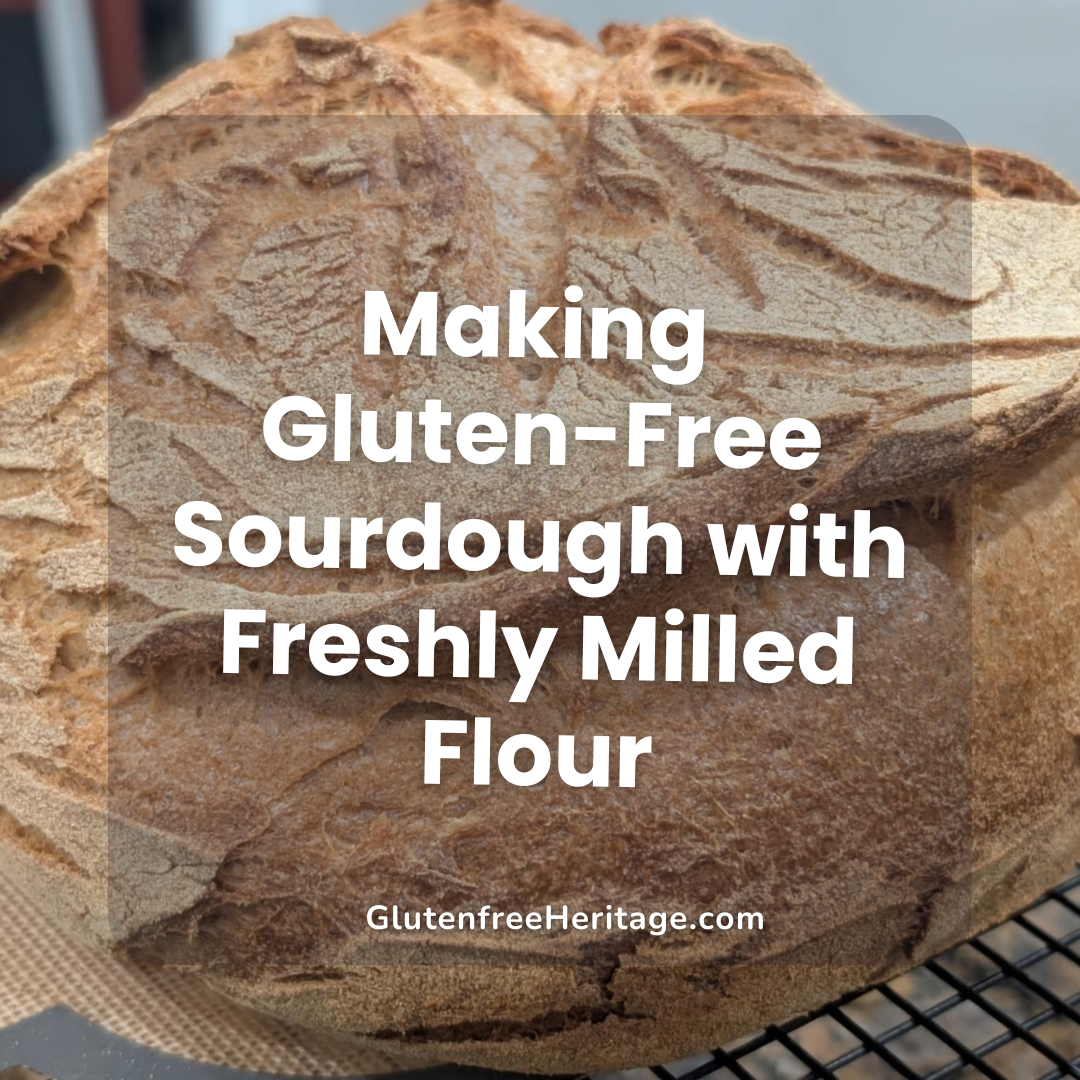
I prepared the bread dough according to Natasha’s directions, spread fresh flour on a pastry mat, and applied olive oil to my hands for easier handling. After 18 hours in the refrigerator, I successfully baked the loaf in a Dutch oven, which helped achieve excellent oven spring and a beautiful final shape. I was delightfully surprised that this loaf had a nice rise, an airy crumb, and a nice tangy flavor characteristic of traditional sourdough.


Tips for Home Bakers
- Always cover the bowl to maintain humidity
- Adjust the hydration level depending on the type of flour
- Use a flour mill or grain mill to get fresh flour for better results
- Combine brown rice flour or gluten-free alternatives. along with a starch, and xanthan gum for the best structure
- Track the first rise and bulk fermentation carefully
- A kitchen scale ensures consistent results
Benefits of Fresh-Milled Flour
Using a grain mill at home offers:
- Essential minerals from germ layers of grains
- Nutritious ingredients for better health benefits
- Superior enzymatic activity compared to commercial flour
- Ability to create own flour blends for free breads and gluten-free recipes
Even a small investment in a flour mill can make a huge difference in texture, flavor, and sourdough bread recipes.
Conclusion: Embracing the Process
Making gluten-free sourdough is challenging but rewarding. A bit of patience, consistent feedings, and using nutritious ingredients from fresh flour are crucial. You don’t need to wait for a perfect double or triple rise; as long as the starter is active, bubbly, and shows signs of bulk fermentation, you’re ready to bake.
The journey from store-bought flour to freshly milled flour and finally to gluten-free sourdough taught me to adjust hydration, ratios, and even the baking method for best results. It also helped me better understand the health benefits of fresh-milled whole grains, even in gluten-free breads.
Want to Join the Journey?
Join the Fresh Milled | Gluten Free Facebook community to share recipes, troubleshoot starters, and celebrate small wins with home bakers.
If you’re looking for gluten-free baking support, fresh-milled flour baking tips, recipes, or even a little guidance with gluten-free sourdough, this is a wonderful community to join.
Affiliate Link Disclosure
This post contain Amazon Associate & other Affiliate links. Using code VINTAGEVIRTUES may help you save $20 at NutriMill checkout and may earn me a small commission at no extra cost to you. Your support helps me continue sharing gluten-free tips, fresh-milled flour recipes, and guides for home bakers.
Leave a Reply