Gluten-Free Buckwheat Bread Recipe | Made with Whole Buckwheat Groats
When my daughter, who mills her own flour, asked me about traditional dark European bread, I reminisced over how lovely those hearty loaves are. But many traditional dark breads contain gluten, and since I avoid it, I needed an alternative that would deliver the same satisfying texture and deep flavor.
Still, the question lingered. Could I create a gluten-free version that captures the dark color, hearty crumb, and unmistakable earthy flavor of traditional bread without using any gluten-containing grains?
That question turned into a great time of experimenting. First, I started with Gluten-Free Mock Rye Bread Recipe, made with Teff Flour. Then, I substituted Buckwheat for the Teff and came up with this recipe. Both resulted in flavorful, sliceable sandwich breads.
Reimagining Dark Bread Without Gluten
When I thought about dark bread and traditional European loaves, buckwheat came to mind. Despite its name, buckwheat is not actually wheat at all. It’s a pseudo-grain related to rhubarb, making it naturally gluten-free and an excellent choice for those with celiac disease or gluten sensitivity. Raw buckwheat has a naturally deep color, a mild nutty flavor, and a nutritional profile that sets it apart from other gluten-free flours. Buckwheat is high in fiber, magnesium, and protein, making it a nutritional powerhouse among gluten-free flours. It is best known for buckwheat pancakes and traditional Eastern European dishes, but it also performs beautifully in loaf breads and even desserts. I carefully weigh out and grind whole buckwheat groats I purchase from Azure Standard using my NutriMill Harvest. You can also use a high-speed blender or food processor to create homemade buckwheat flour.


My initial thought was to use buckwheat flour for color and texture, psyllium husk powder for structure, and simple ingredients to let the nutty flavor of buckwheat shine through. This homemade buckwheat bread is a fantastic choice for those looking for gluten-free bread recipes that actually taste good and hold together.
From Concept to Dough
Buckwheat flour bread can easily become dense if there isn’t enough liquid, hello, dry pancakes. So I knew this buckwheat loaf would need much more liquid than regular bread, same as the teff bread recipe I based this one on. At the same time, structure is critical in gluten-free dough.
Because I avoid xanthan gum and guar gum, I rely on psyllium husk powder to build structure. Psyllium creates a gel that mimics gluten’s elasticity and supports the dough’s rise without the need for gums. It also gives bread a light chew. For this recipe, I used psyllium husk powder, which is essential for the best results.
Active dry yeast provides the lift here. This is not sourdough bread, but rather a yeasted loaf made with simple ingredients. Instant yeast can also be used if that’s what you have on hand. Commercial yeast makes the fermentation process more accessible, especially if this is your first time making a gluten-free bread recipe.


Mixing and Fermentation
The dough came together in the bowl of my Bosch Universal Plus Mixer fitted with the whisk attachment. Gluten-free dough is not kneaded like whole wheat bread; instead, it resembles a thick paste. Begin by combining the warm water, yeast, olive oil, and a little honey. The warm water and honey activate and feed the yeast, jump-starting the fermentation process. Save $20 off your own Bosch Universal Plus, or Artistse Mixer with code VINTAGEVIRTUES.
Once foamy, psyllium husk powder is mixed in at medium speed to form a gel. This step is essential and should be done before adding the dry ingredients. In a large bowl, whisk together light buckwheat flour, flaxseed meal, salt, and seeds. I used fennel seeds in this recipe for a nice pop of flavor. Alternatively, flaxseeds, sesame seeds, or even a seed blend are all lovely choices for this seeded bread recipe. I measure most ingredients in grams for accuracy.
Although buckwheat can be blended with brown rice flour, tapioca flour, sorghum flour, tapioca starch, or even cassava flour to create gluten-free flour blends, this recipe intentionally keeps buckwheat as the dominant grain. This approach honors the traditional bread concept while embracing whole grains in their purest form, and avoids starches for those trying to limit them.
Pan Choice and Rise
Once combined, the dough is transferred into an oiled, enameled cast-iron loaf pan, lined with a bread sling for ease of removal. The high walls reinforce the bread’s strength and encourage upward rise. Smooth the top, brush lightly with oil, and sprinkle remaining seeds over the surface of the dough. You could also use sunflower seeds, poppy seeds, hemp seeds, or chia seeds for the topping. Cover loosely with a tea cloth or plastic wrap.

8X4 Enameled Cast Iron Baker

8X4 Enameled Cast Iron Baker
The first rise happens at room temperature in a warm spot and usually takes about an hour, though less time may be needed depending on your kitchen temperature. Gluten-free dough does not benefit from a second rise. In fact, it’s important not to over-proof yeasted breads. Bake when the loaf looks puffy and has risen to the top of the pan.
Baking and Cooling
Bake at 425°F (adjust for a fan oven if needed). This high heat sets the structure quickly and supports oven spring. Bake for about 45 minutes, or until the internal temperature reaches at least 205°F. Once baked, remove the loaf from the bread pan and transfer it to a wire rack.
Cooling completely is essential. Use a sharp bread knife only after the loaf has cooled fully. Cutting too soon is one of the most common causes of gumminess in gluten-free bread alternatives. This extra step ensures moist crumbs without the gummy texture.


The Finished Loaf
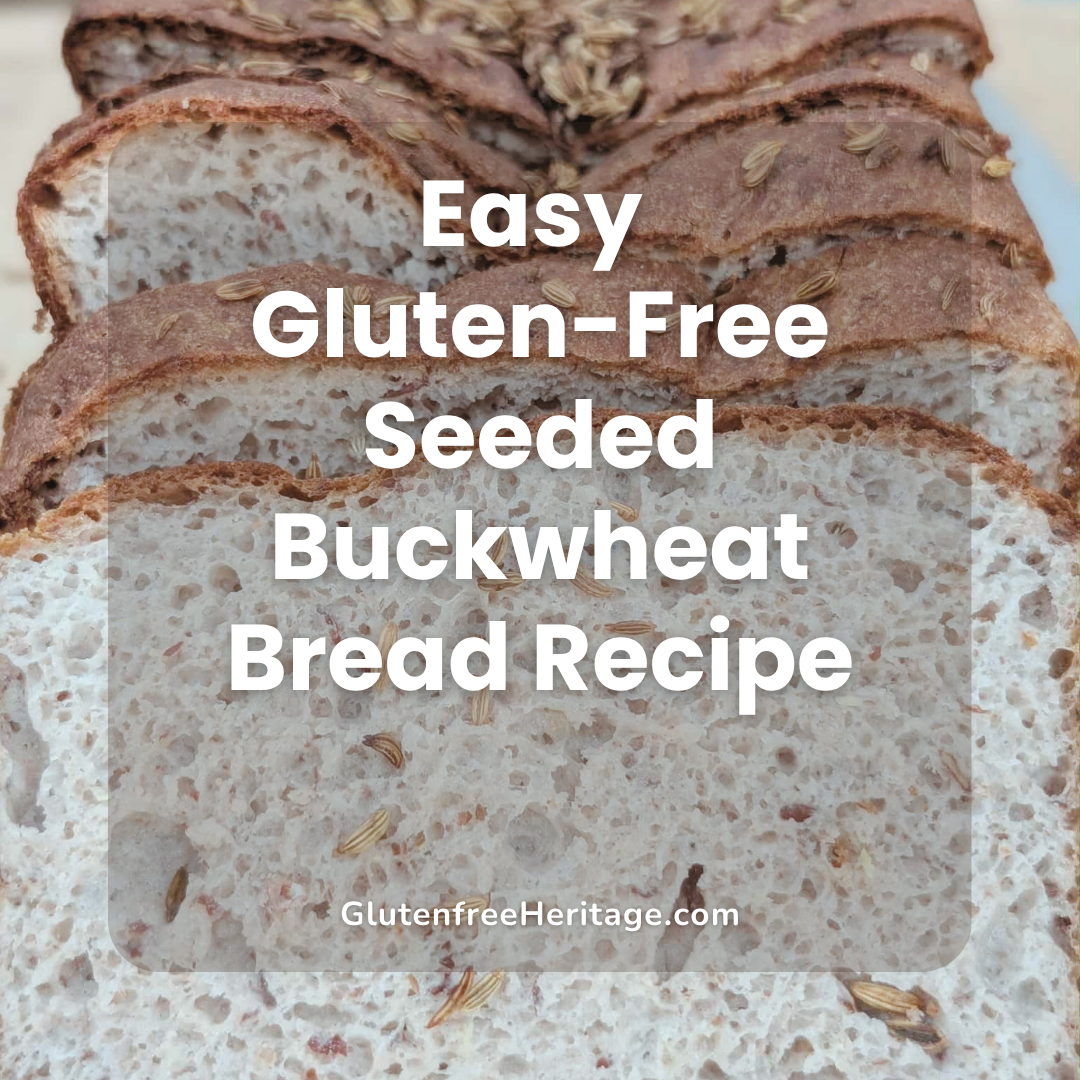
The finished product is a hearty, dark bread with excellent structure and a satisfying chew. It does not crumble, making it ideal for sandwiches and toasting. The fennel seeds add a satisfying flavor and texture that beautifully complement the nutty flavor of buckwheat. If you enjoy vegan bread recipes or pumpernickel-style loaves, this buckwheat bread fits right in. Next time you make it, you might experiment with different seeds.
Easy Gluten-Free Seeded Buckwheat Bread Recipe

Easy Gluten-Free Seeded Buckwheat Bread Recipe
Equipment
- 1 Universal Plus Mixer Get $20 Off with code VINTAGEVIRTUES at: https://nutrimill.com/VINTAGEVIRTUES
Ingredients
Wet ingredients
- 2 teaspoons active dry yeast (≈ 6 g)
- 2 cups warm water, 100–110°F (≈ 410 g)
- 1 tablespoon olive oil (≈ 14 g)
- 2 teaspoons honey (≈ 14 g)
- ¼ cup Psyllium husk powder (≈18 g)
Dry ingredients
- 2 cups buckwheat flour (≈ 240 g)
- 3 tablespoons ground flaxseed meal (≈ 21 g)
- 1 teaspoon sea salt (≈ 6 g)
- 1 teaspoon fennel seeds, or seeds of choice (≈ 2 g)
Topping
- 1 teaspoon fennel seeds, or seeds of choice (≈ 2 g)
- Olive oil for brushing
Instructions
- Activate the yeast: In a small bowl, combine the warm water, yeast, olive oil, and honey. Stir gently and let sit 5–10 minutes, until foamy and active.
- Form the psyllium gel: Transfer the activated yeast mixture to a mixer bowl. With the mixer running, add the psyllium husk powder and mix 1–2 minutes, until the mixture becomes gel-like.
- Mix dry ingredients: In a separate medium bowl, whisk together the buckwheat flour, ground flaxseed, salt, and fennel seeds (or seeds of choice) until evenly combined.
- Combine wet + dry ingredients: Add the dry ingredients to the wet psyllium mixture. Mix thoroughly until a thick, sticky dough forms. Scrape down the bowl as needed. The dough should be cohesive and paste-like, not pourable.
- Transfer the dough to an 8 × 4-inch loaf pan (cast iron enamel works well): Smooth the top with an oiled spatula. Brush lightly with olive oil and sprinkle evenly with fennel seeds (or seeds of choice).
- Rise: Cover loosely with a tea towel or plastic wrap and let it rise to top of pan, about an hour.
- Bake: Preheat oven to 425°F. Bake uncovered for 45 minutes, until the internal temperature reaches at least 205°F.
- Cool completely before removing from pan and slicing. Enoy!
Notes
Variations and Notes
This is a fantastic bread, as it is. But some potential variations include using light buckwheat flour instead of hulled buckwheat flour, or even teff for a darker color and richer flavor. You could swap the sesame seeds for chia, hemp, or sunflower seeds to achieve different nutritional profiles. If you’re using instant yeast instead of active dry yeast, you can skip the activation step and add it directly to the dry ingredients, though you may need less water or much more water depending on your flour.
For a tangier flavor, add a tablespoon of apple cider vinegar to the wet ingredients. Some bakers also like adding baking powder (1/2 teaspoon) alongside the yeast for extra lift, though this is an extra step that isn’t necessary for good results.
For useful tips: if your dough seems too thick, add cold water a tablespoon at a time. If it’s too thin, add a little bit more buckwheat flour. Every batch of homemade buckwheat flour can vary slightly in moisture content, so adjust as needed.
A Gluten-Free Heritage Loaf
This homemade buckwheat bread proves that traditional flavors don’t have to be left behind. Whether you’re baking for celiac disease, gluten sensitivity, or curiosity, this recipe honors heritage while embracing naturally gluten-free whole grains.
Buckwheat has been used in traditional bread across Eastern Europe and Asia for centuries, and bringing it into modern gluten-free recipes feels like a natural fit. This is a good option for anyone looking to expand their repertoire of gluten-free recipes beyond the usual gluten free flour blends. The neutral flavor base of buckwheat makes it versatile enough to pair with sweet or savory toppings.
Happy baking!
Affiliate Disclosure
This blog post contains affiliate links. Purchases made through these links help support Gluten-Free Heritage at no additional cost to you. Thank you for supporting this work!


Leave a Reply