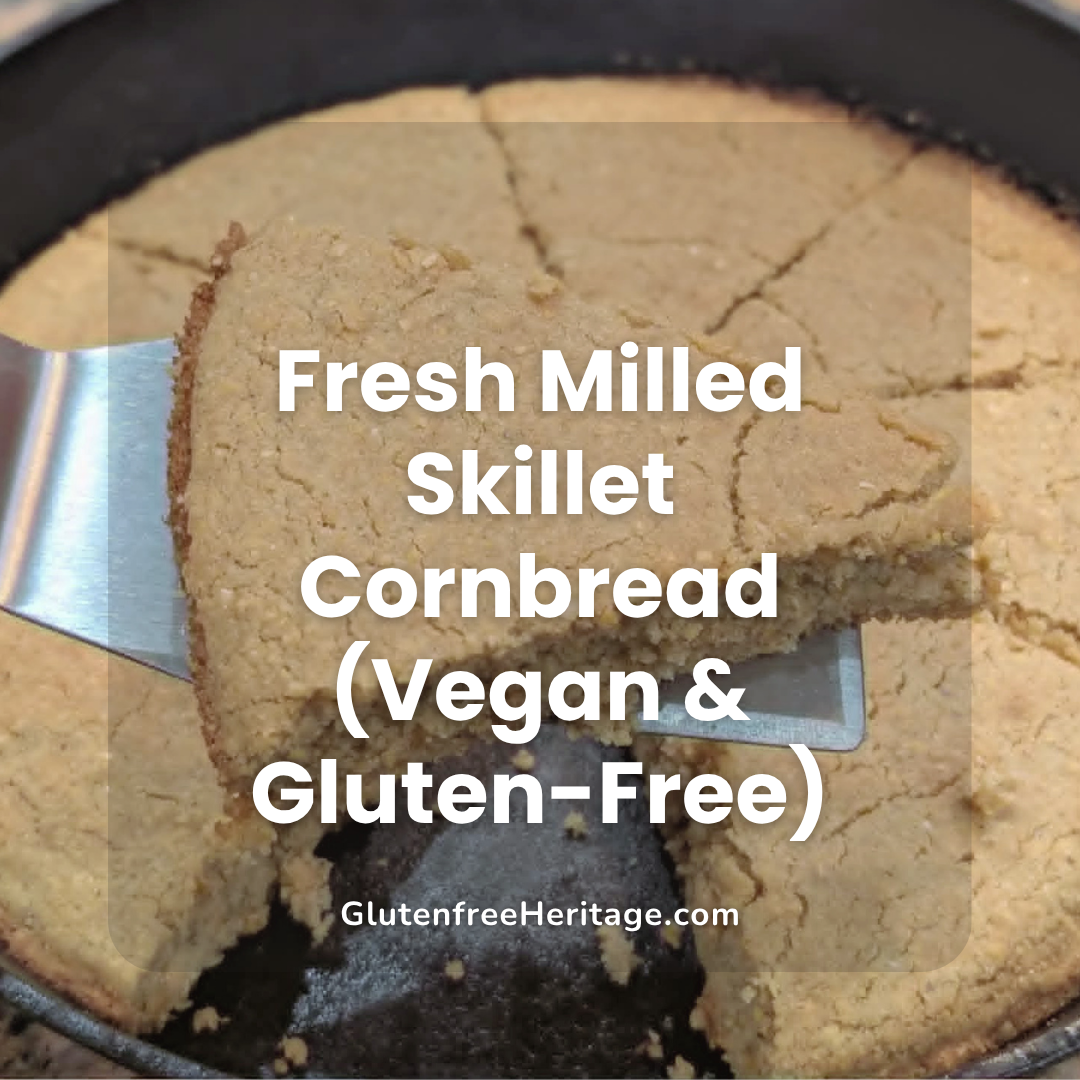
Skillet Cornbread
There’s something nostalgic about the smell of homemade cornbread baking in a cast iron skillet. It reminds me of my husband’s grandmother’s home, but now I’m the Grandma! This gluten-free cornbread recipe has become a staple in our home, and I’m happy to share it with you. It’s my son’s favorite, and my husband will eat more than one piece at a time. This vegan cornbread combines simple ingredients with fresh-milled grains to create a delicious side dish as good as traditional Southern cornbread.


Why This Recipe Works
This dairy-free cornbread is special because it strikes the perfect balance between sweet and savory while keeping the tender crumb everyone loves. The only difference from traditional recipes is that this one is a completely dairy-free, egg-free cornbread and uses gluten-free baking techniques. Trust me, the only thing you’ll miss is feeling guilty about having another piece!
I’ve experimented with countless gluten-free recipes over the years, and this easy recipe consistently delivers results that would make any southern girl proud. Whether you’re managing celiac disease, Hashimoto’s, following a vegan lifestyle, or want to try something new with fresh-milled grains, this simple cornbread recipe will exceed your expectations.
Fun with Fresh-Milled Corn Meal
Yes, you read that correctly: I mill my own yellow cornmeal from organic corn popcorn kernels using my NutriMill Harvest. I transform regular popcorn into the most incredible fresh cornmeal you’ve ever tasted. The flavor is incomparably better than store-bought corn flour, and the medium-grind cornmeal creates the ideal texture. If this is your first time hearing about milling popcorn, prepare to be amazed. The NutriMill handles corn products beautifully, including the corn kernels I use regularly.
If you don’t have a grain mill yet, don’t worry. You can absolutely use quality store-bought cornmeal. Azure Standard and even Bob’s Red Mill offer excellent options that work wonderfully in this recipe. Look for their yellow cornmeal or medium-grind cornmeal for best results.
Understanding the Flour Blend
I developed my signature all-purpose gluten-free flour blend over years of gluten-free baking. Be sure to check out the full recipe: Fresh Milled Gluten-Free Cup4Cup Flour Blend Recipe. If you’re using a commercial flour blend, make sure it already contains psyllium husk powder or xanthan gum, or add 1/2 teaspoon to the dry ingredients. This ingredient helps with binding and elasticity in gluten-free baking.
Creating Plant-Based “Buttermilk”
One of my favorite tips for achieving authentic Southern cornbread flavor without dairy is creating a vegan “buttermilk.” Combine oat milk with apple cider vinegar to create a tangy mixture that mimics traditional buttermilk. Mix the two and let them sit for about 5 minutes while you prepare other ingredients. The apple cider vinegar causes the milk to curdle slightly, creating that characteristic buttermilk texture and flavor.
You can substitute the oat milk with almond milk, cashew-oat milk, or any dairy-free milk you prefer. I’ve tested this recipe with all of them, and each works beautifully.
The Cast Iron Skillet Method
Using a cast-iron skillet isn’t just traditional; it’s essential for creating that signature golden brown crust on the bottom of the cornbread. The hot skillet sears the cornbread batter the moment it hits the pan, creating an irresistible crispy exterior while keeping the inside moist and tender.
I preheat my cast-iron pan in the oven, coating the bottom and sides with about two tablespoons of avocado oil. By the time my preheated oven reaches 425 degrees, the skillet is perfectly seasoned and ready. If you don’t have a cast-iron skillet, you can use a pie pan or cake pan, but you’ll miss out on that distinctive crust. A muffin tin also works great for making individual cornbread muffins, though adjust the baking time to about 15 minutes.
Step-by-Step Instructions
Preparation
First, preheat your oven to 425 degrees with your cast iron skillet inside, coated with oil, vegan butter, or avocado oil. While the oven heats, prepare your plant-based buttermilk by combining the oat milk and apple cider vinegar in a measuring cup. Set this aside to reach room temperature and let the acid work its way through.
If you’re milling your own grains, now’s the time to mill your popcorn into yellow cornmeal. I also mill my all-purpose gluten-free flour blend fresh, though you can prepare this ahead and store it in an airtight container for convenience. Or use store-bought versions.
Mixing the Batter
In a large mixing bowl, whisk together the dry ingredients: the cornmeal, all-purpose gluten-free flour blend, raw cane sugar, baking powder, baking soda, and salt. Make sure everything is well combined.
In a separate bowl, combine your wet ingredients. Add your plant-based buttermilk mixture and melted plant butter (or melted butter if not keeping it vegan). The butter should be melted but not scalding hot. If you’d like to use eggs, add two eggs here, though honestly, this recipe doesn’t need them. I’ve even tried flax eggs in a variation of this recipe.
Pour the wet ingredients into the dry ingredients and stir until just combined. Don’t overmix! A few lumps are perfectly fine. Overmixing develops the gluten-free flours too much and can result in a tough texture instead of that tender crumb we’re after.
Baking
Carefully remove your hot skillet from the preheated oven using oven mitts. Pour the cornbread batter into the sizzling pan and listen to that satisfying sizzle as it hits the oil. Use a spatula to spread it evenly if needed.
Return the skillet to the oven and bake for approximately 20 minutes, or until the top is golden brown and a toothpick inserted in the center comes out clean. I like to check the internal temperature with a thermometer; it should read around 200 degrees when fully baked.
Let the cornbread cool in the cast iron skillet for at least 10 minutes before slicing. This cooling period helps it set up properly and makes slicing easier.
Serving Suggestions
This cornbread works well with many meals. Serve it alongside fried fish, chili, beef stew, or any hearty soup. It’s also delicious with honey drizzled on top for breakfast, or split and toasted with vegan butter for a snack.
Storage Tips
Store leftover cornbread in an airtight container at room temperature for up to 3 days. You can also wrap individual pieces in plastic wrap and freeze for up to 3 months. For longer storage, wrap the entire loaf in aluminum foil before freezing.
To reheat, simply warm in a 350-degree oven for about 10 minutes, or microwave individual pieces for 20-30 seconds. The texture holds up remarkably well, making this perfect for meal prep.
Variations and Substitutions
While this sweet cornbread recipe is perfect as written, here are some variations:
For a less sweet version, reduce the cane sugar to 1/4 cup or try honey instead. This creates a more traditional Southern cornbread that works well as a side dish.
Substitute brown sugar for the raw cane sugar for a deeper, more molasses-forward flavor.
Add fresh or frozen corn kernels to the batter for extra texture and corn flavor; mix in about 1/2 cup just before baking.
If you can tolerate dairy, use milk or buttermilk and real butter. You can even add up to 1/2 cup of shredded cheese for a fun twist.
Tips for Success
Bring your wet ingredients to room temperature before mixing. This helps everything combine more smoothly and creates a better texture in the final product.
Don’t skip preheating the cast iron skillet. That hot pan is crucial for developing the crispy, golden-brown bottom that makes skillet cornbread special.
Weigh your ingredients for the most consistent results. My NutriMill glass scale makes this easy and accurate every time.
Make sure your baking powder is fresh. Old leavening agents won’t provide adequate rise.
Why Fresh-Milled Makes a Difference
Fresh-milling transforms this from a good recipe into the best vegan cornbread I’ve tasted. Freshly ground corn has a sweet, nutty, complex flavor that store-bought cornmeal doesn’t match. The same goes for the homemade gluten-free flour blend. While Bob’s Red Mill products are a great option and produce excellent results, homemade gluten-free flours have something special that makes this an easy gluten-free recipe to fall in love with.
Final Thoughts
This egg-free cornbread has earned its place as a family favorite in our home. Whether you’re new to gluten-free baking or you’ve been making gluten-free recipes for years, this simple cornbread recipe delivers every single time. The tender crumb, the golden-brown crust from the cast iron skillet, and the perfect balance of sweet and savory make this the best cornbread recipe in my collection.
I hope your family loves this as much as mine does. Check out the recipe card below for full instructions, and don’t miss the video of me making it! Drop a comment and let me know what you think, especially if this is your first time making dairy-free cornbread.
Recipe Card

Fresh-Milled Skillet Cornbread (Vegan & Gluten-Free)
Equipment
- 1 Grain Mill Get $20 Off with code VINTAGEVIRTUES at: https://nutrimill.com/VINTAGEVIRTUES
Ingredients
Dry
- 1 1/4 cups Cornmeal (165 Grams)
- 1 1/4 cups Gluten-Free Flour Blend* (165 grams)
- 1/2 cup Raw Cane Sugar (125 grams)
- 2 tsp Baking Powder (8 grams)
- 1/2 tsp Baking Soda (3 Grams)
- 1 tsp Salt (7 grams)
Wet
- 1 1/2 cups Oatmilk (324 grams)
- 1 tbs Apple Cider Vinegar (13 Grams)
- 1/2 cup Plant -based butter, melted (113 grams)
Instructions
Preparation
- Preheat your oven to 425 degrees with your cast iron skillet inside, coated with two tbsp oil.
- Prepare your plant-based buttermilk by combining the oat milk and apple cider vinegar in a measuring cup. Set this aside to reach room temperature and let the acid work its way through.
- Mill your popcorn into yellow cornmeal.
- Mill the all-purpose gluten-free flour blend fresh, though you can prepare this ahead and store it in an airtight container for convenience. Or use store-bought versions.
Mixing the Batter
- In a large mixing bowl, whisk together the dry ingredients: the cornmeal, all-purpose gluten-free flour blend, raw cane sugar, baking powder, baking soda, and salt.
- Make sure everything is well combined.
- In a separate bowl, combine your wet ingredients. Add your plant-based buttermilk mixture and melted plant butter (or melted butter if not keeping it vegan).
- Pour the wet ingredients into the dry ingredients and stir until just combined. Don't overmix! A few lumps are perfectly fine.
Baking
- Remove your hot skillet from the preheated oven using oven mitts.
- Pour the cornbread batter into the sizzling pan and use a spatula to spread it evenly if needed.
- Return the skillet to the oven and bake for about 20 minutes, or until the top is golden brown and a toothpick inserted in the center comes out clean, or the thermometer reads about 200 degrees.
- Let the cornbread cool in the cast iron skillet for at least 10 minutes before slicing. This cooling period helps it set up properly and makes slicing easier.
Notes
Let’s Make Skillet Cornbread
Where I Shop
I get the majority of my baking ingredients and grains for fresh milling from Azure Standard. They offer incredible quality organic corn for milling, as well as all the components for my gluten-free flour blends. For milling and mixing, I use NutriMill and Bosch products. To save $20 off select products, use our code VINTAGEVIRTUES and this link.
Affiliate Disclosure
This blog post contains affiliate links. Purchases made through these links help support Gluten-Free Heritage at no additional cost to you. Thank you for supporting this work!
Leave a Reply